Cargo Delivery by UAV: What I Learned Founding the Paper Plane Team
The Unmanned Aerial Vehicles and Technology seminar I gave at Gedik University: the real cost lines of parcel logistics, a delivery network built on mobile ground control stations, and the Paper Plane cargo UAV airframe study.
In This Article
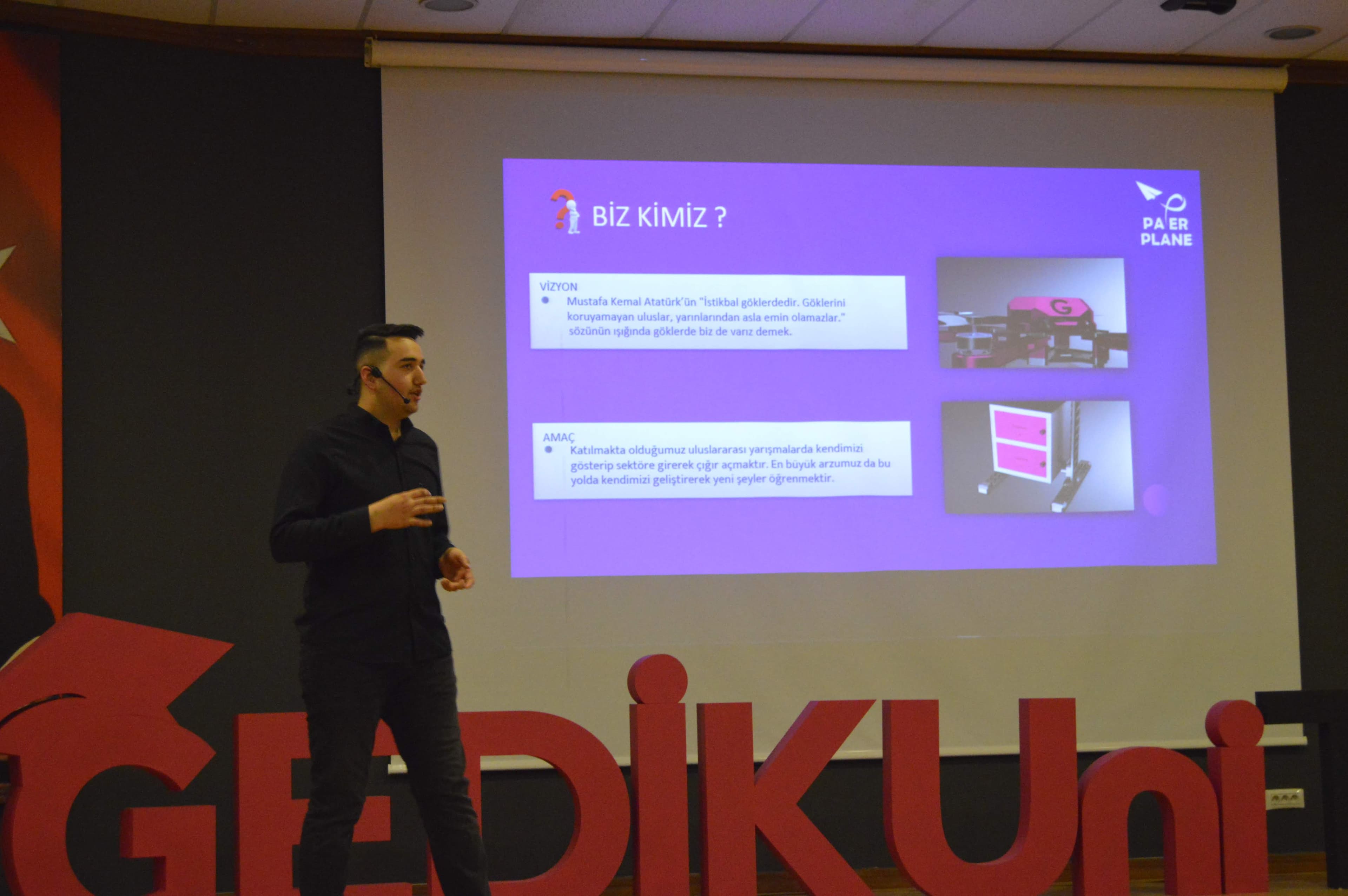
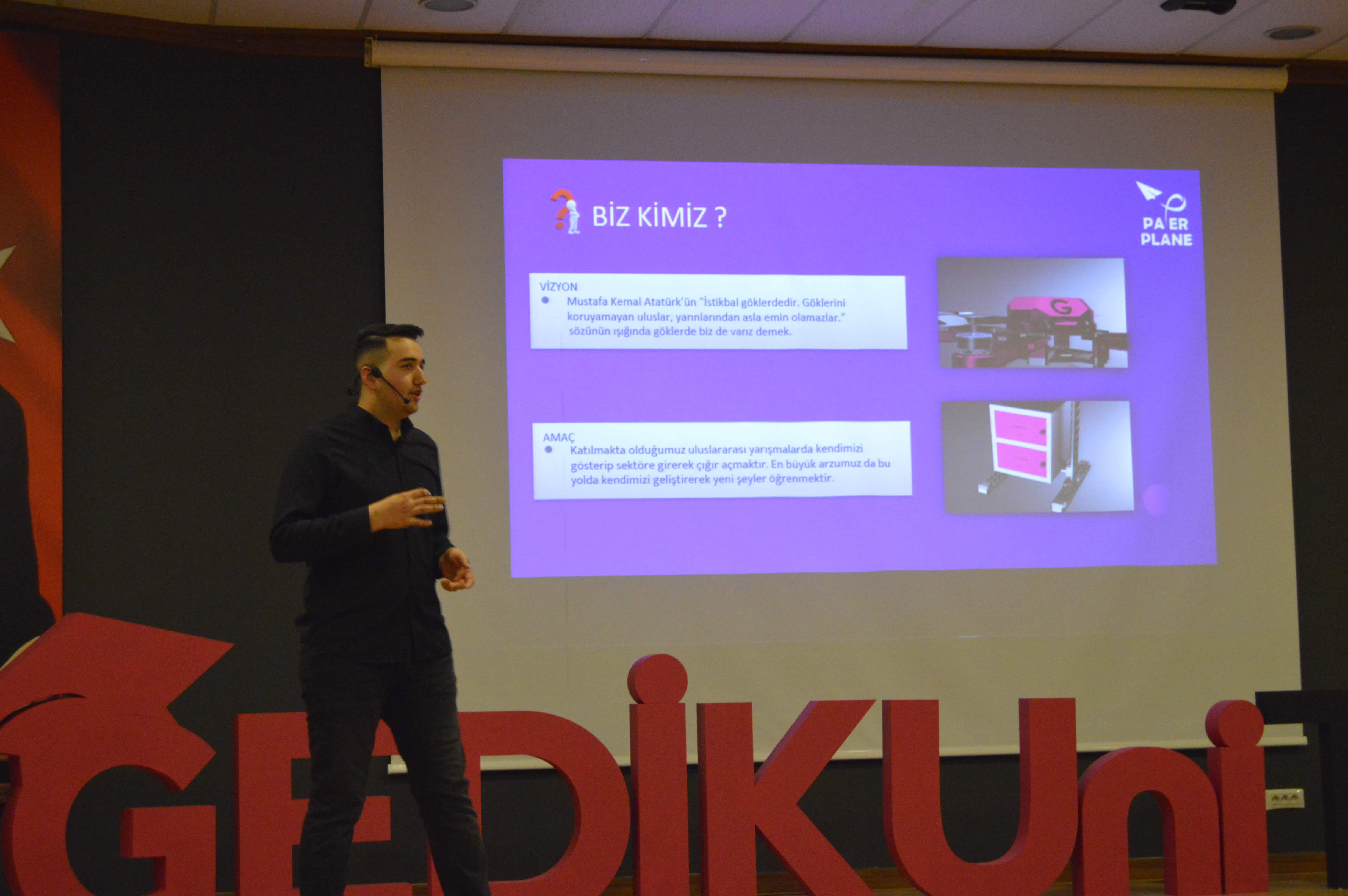
Turning an engineering idea into a presentation slide is that idea's first serious test. In April 2022, at the Unmanned Aerial Vehicles and Technology Seminar we organised together with Istanbul Gedik University's Technology Club, I saw this plainly while presenting the Paper Plane UAV Team I had founded: designing a drone was the easy part; the hard part was explaining why you built it well enough to convince a room.
Problem first, vehicle second
The trap we fell into most often while founding the team was starting from the vehicle. "Let's build a drone like this" was exciting, but it did not say which problem it solved. So I built the spine of the presentation not on the aircraft but on the cost table of parcel distribution.
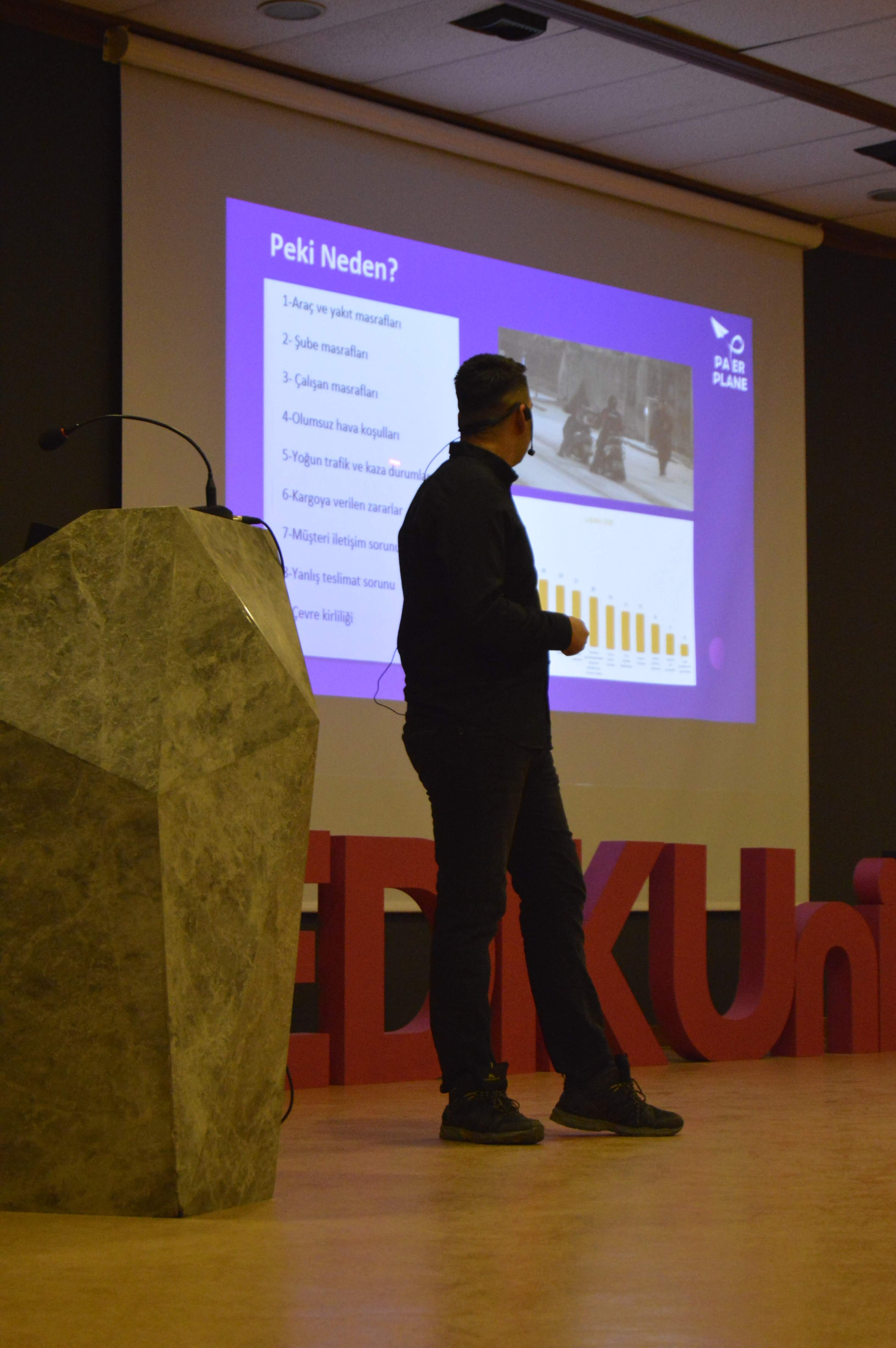
The line items that inflate cost in parcel and last-mile delivery are surprisingly ordinary:
- Vehicle and fuel costs
- Branch and staff expenses
- Adverse weather conditions
- Delays from heavy traffic and accidents
- Physical damage to parcels
- Customer communication and misdelivery problems
- Pollution generated by the delivery fleet
Here is why that list matters: none of these is an aviation problem. Every one of them is a logistics problem. The unmanned aircraft is not the goal here; it is a tool that attempts to remove some of these line items.
If you pick the vehicle before the problem, every engineering decision that follows is spent justifying that choice.
The model we proposed: a network, not a single drone
In the second half of the seminar I covered the solution. A scenario where one long-range aircraft carries everything was unrealistic on both battery and regulatory grounds. Instead, we proposed a network of mobile ground control stations.
.jpg)
Roughly, the model worked like this:
- Instead of fixed branches, mobile ground control stations are deployed and can operate around the clock.
- UAVs make short and medium-range hops between these stations; each hop is planned to fit within battery capacity.
- Stations and vehicles exchange data continuously; route, weather, and delivery status are common knowledge across the network.
- Range therefore comes not from a single vehicle's capacity but from the topology of the network.
In its first stage, this approach targeted a cheaper and faster logistics option for short and medium-range locations.
The airframe: Paper Plane cargo UAV
The aircraft itself mattered as much as the network design. We focused on a six-rotor cargo UAV with a dedicated payload bay beneath the main body and flight control above.
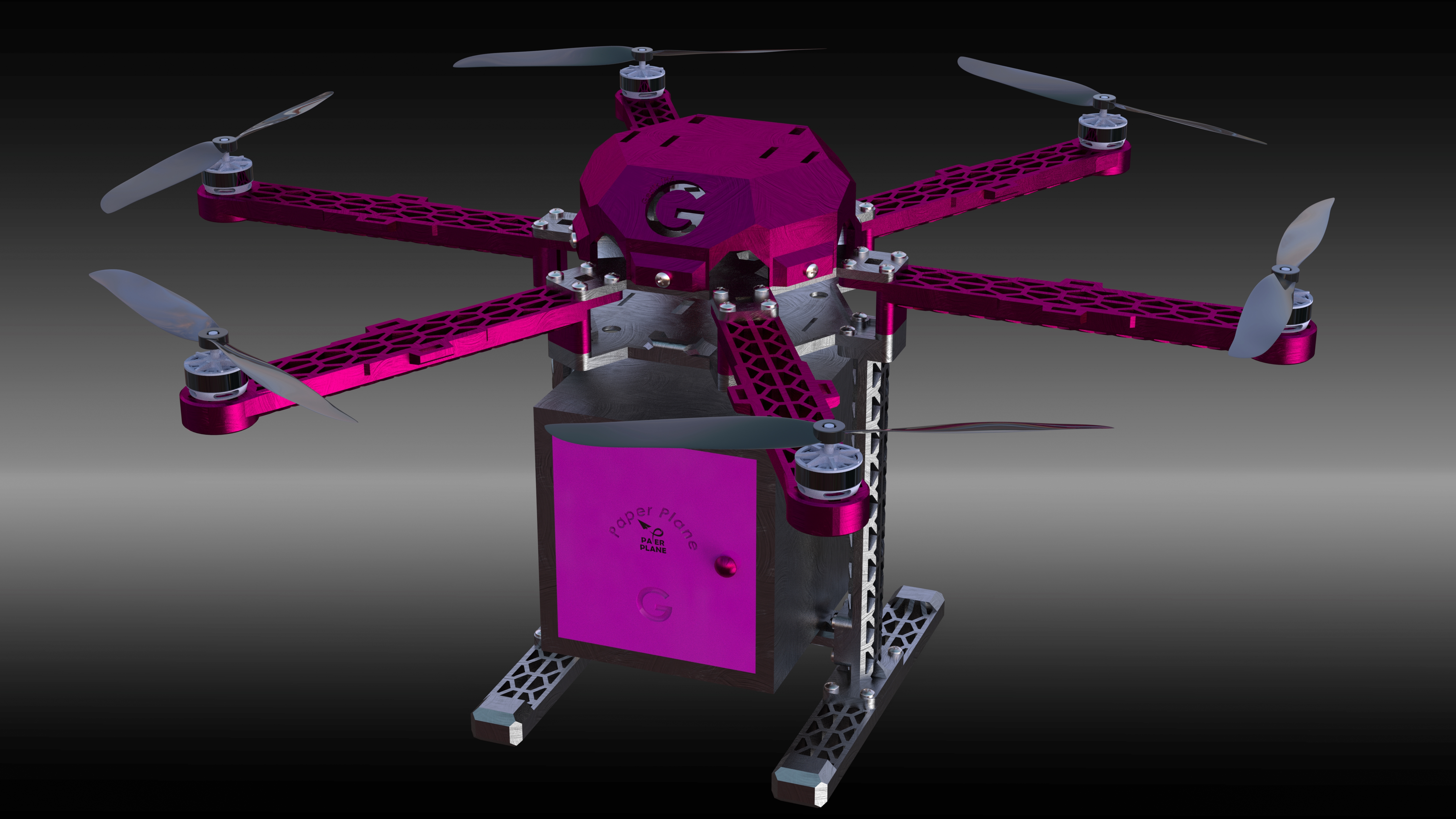
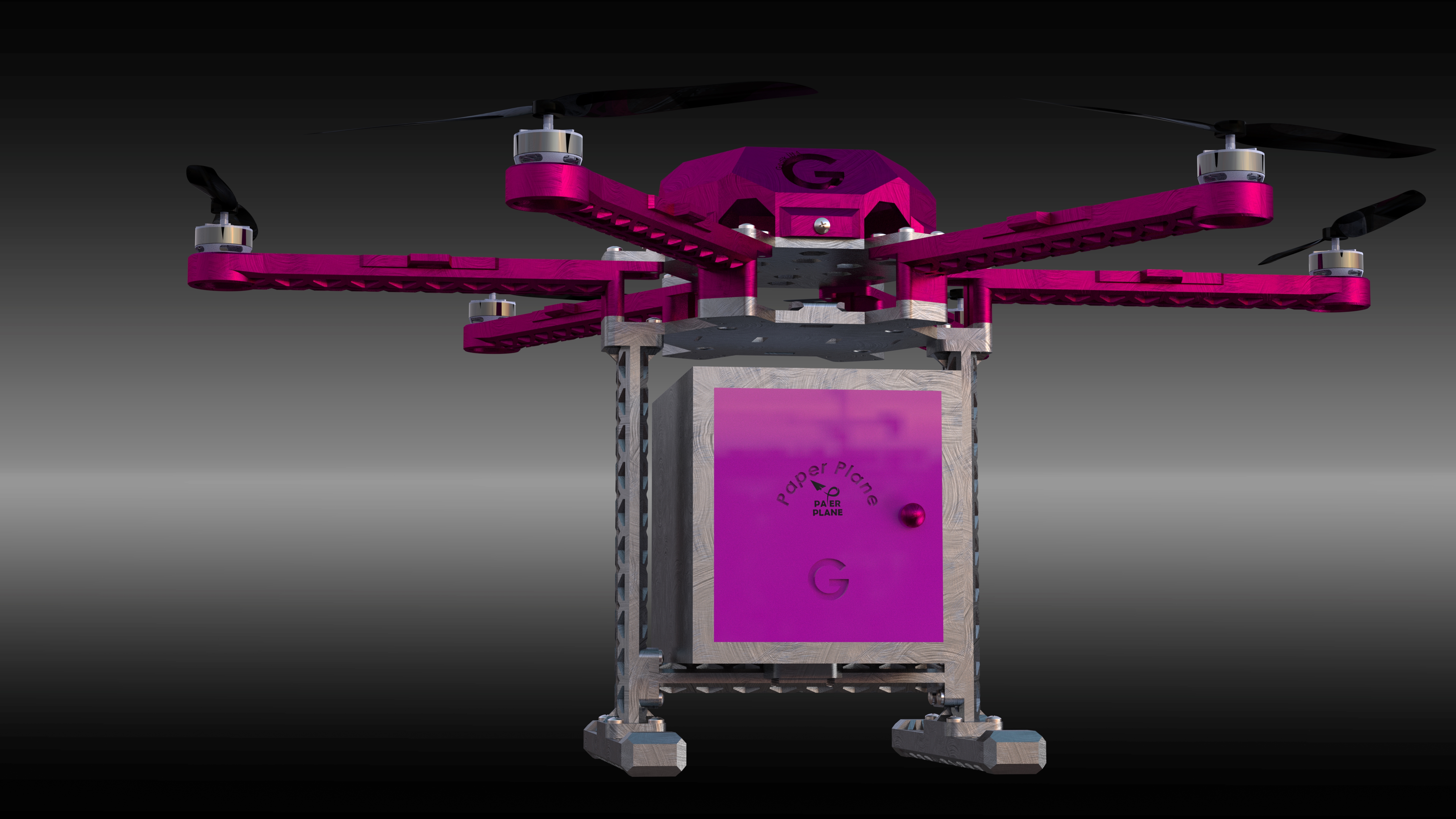
This hexacopter layout aimed to keep the cargo volume centred in the airframe while reducing the footprint needed for take-off and landing. For me the study was also a serious CAD exercise: every change to an arm or the cargo module meant recalculating the body section and the centre of gravity. This was the first time I felt why parametric design is a necessity rather than a luxury.